
Description
1 | Yes, You – 2:30 (Bobby McFerrin)
2 | Road ft. Victoria Victoria – 2:52 (Nick Drake)
3 | The Banquet – 2:31 (John Williams)
4 | Mameya – 4:27 (Dan White)
5 | Cry On My Shoulder ft. Victoria Victoria – 3:20 (Michael Ruff)
6 | Old Man – 4:12 (Neil Young)
7 | Stone City – 4:13 (Dan White)
8 | Fly – 5:20 (Dan White)
9 | Don’t Get Around Much Anymore – 4:04 (Duke Ellington)
10 | Peonies – 4:14 (Dan White)
11 | Valley Bee – 2:41 (Dan White)
12 | Song Of India – 3:45 (Rimsky-Korsakov)
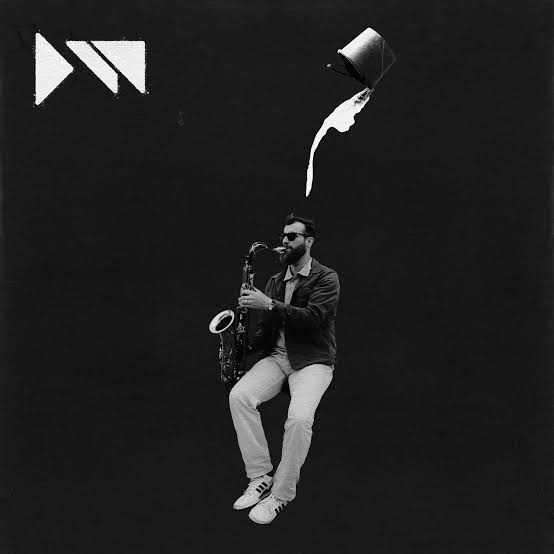
Along with guitarist Charlie Hunter, saxophonist Dan White have joined drummer Scott Amendola for Dee Dub, a collection of originals and personal interpretations of songs by other writers. Arranged and produced by White, it is an autobiographical statement that distills the energy he brings to his collaborations with Huntertones, Cory Wong, Lake Street Dive, and others.
The trio formed as an outgrowth of White’s work alongside Hunter in Kurt Elling’s funk-and-soul leaning SuperBlue. “I was touring and becoming closer with Charlie over the summer of 2025. Charlie then introduced me to Scott,” White explains. “We played a few gigs together and became fast friends. We had a clear stylistic bond and locked into each other’s sound immediately.”
With the three players aligned and White wanting to document connections from past to present, they went to Earthtones Recording Studio in Greensboro, North Carolina, and recorded the music for Dee Dub live in one room. The sessions were also filmed, with a video release for “Cry On My Shoulder” featuring Victoria Victoria. Originally sung by Bonnie Raitt, “Cry On My Shoulder,” White said, “The original version from the late ‘80s had a lot of splashy synths and this take is a lot sparser and drier to really embrace the intimacy.”
The album ties self-exploration to the music that has guided him: Joshua Redman’s Elastic Band, the joy in Eddie Harris’ work, and the wit of Sonny Rollins’ trio recordings. Several guests fill out the picture.
The album opens with Bobby McFerrin’s “Yes, You,” where White, Hunter, and Amendola settle in together. “It’s planting a flag of pocket,” the leader explains. Ott’s conch shells color the track, which sets the tone of the album and points to McFerrin’s importance in White’s world. “Bobby McFerrin is one of my heroes,” he says. “Medicine Music, the album that this song appeared on, was in heavy rotation when I was growing up. Bobby performs afternoon a cappella shows at Freight & Salvage in Berkeley, which I love going to. Each show truly refills my cup.”
Victoria Victoria and McDonald join for a reimagining of Nick Drake’s “Road,” which moves from quiet beginnings into a Mozambique groove. “I discovered Pink Moon right around the time I went to college,”
Between the vocal tracks, the trio takes on a film theme and an original. “The Banquet,” from John Williams’ score for Hook, features White on baritone and folds several themes into one statement. “That underscores a wonderful scene about the power of imagination; it’s a big moment still that gives me goosebumps,” he admits. “Mameya,” the first of five White originals on the album, takes its name from a coffee shop in Tokyo where he found comfort while fighting jetlag.
White works through Neil Young’s “Old Man” and then turns to his own “Stone City.” The former interpolates the riff from Labi Siffre’s “I Got The…,” which Eminem sampled for “My Name Is.” The latter is a blowing tune with a touch of “Spanish Joint,” a nod to Hunter’s history with D’Angelo. White’s “Fly” follows and plays up the balance between dissonance and beauty. “It drives, but then it also eases up off the gas,” he shares. “That’s an exploration or encapsulation of all the traveling I’ve been doing recently.
You can see a lot of turbulence in between two jet engines and a lot of peace at 30,000 feet.” The last third of the album puts family at the center. A swaying version of Duke Ellington’s “Don’t Get Around Much Anymore” comes first and connects generations. “That’s dedicated to my late grandfather,”
White explains. “It was one of his favorite tunes. He gave me his first saxophone, made in 1927, the year he was born. And during the pandemic, I would call him every week. We would talk, and on the days where it was a struggle to find words or his memory would be lapsing, I would just play for him on that horn.” “Peonies” is dedicated to White’s better half. “It’s a pause or moment to breathe. There’s a lot of space in this one, between the beats and in between the way that Scott, Charlie and I play it. I’m very proud of that.”
“Valley Bee” takes its name and energy from the street where White was raised, and it spotlights his baritone sound. For the closer, he plays soprano, a rare appearance on the album, in his adaptation of Nikolai Rimsky-Korsakov’s “Song of India.” “I remember going to bed as a kid and hearing my mom practice this beautiful melody on our upright,” he reveals. “The last few notes of the record are from that instrument, the piano that unlocked the creative universe at the start of my musical journey, with the sounds of my family in the background.”
Reviews
There are no reviews yet.